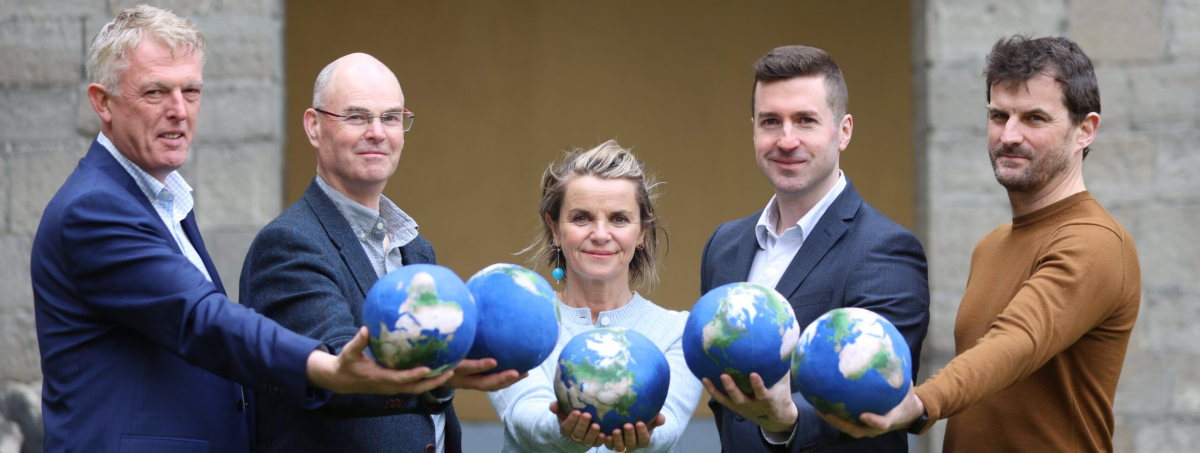
Sustainability has long been framed as a cost in the Irish healthcare sector. Health Innovation Hub Ireland’s Green Dividend report, published July 2026, documents Irish hospital sustainability projects delivering €32,000 in annual savings, 82% energy reductions, and capital payback within two years. For private hospitals with rising energy, waste management, and sustainability reporting costs, this is a board-level financial argument with the evidence to support it.
The report deserves commendation for reframing sustainability in terms that boards can act on immediately. HIHI Greentech in Health lead Eimear Galvin noted that sustainability has too often been framed as a compliance obligation deferred to future budgets. For private healthcare providers, the Green Dividend evidence is an invitation to reassess that position. Organisations embedding sustainable practices will deliver healthcare excellence that is financially disciplined, environmentally responsible, and expected by insurers, staff, and patients.
The public sector benchmark reinforces the opportunity. The HSE Net Zero Decarbonisation Roadmap, published in autumn 2025, commits the public health system to a structured decarbonisation pathway. Healthcare providers in the private sector with comparable sustainability credentials will be better placed in insurer contracting and staff recruitment. Environmental commitment is increasingly part of the patient experience proposition: patients choosing a private hospital are choosing an institution and its values, not just its clinical capabilities.
The SEAI’s dedicated Energy in Healthcare programme provides grant support, energy audit funding, and benchmarking data available to private and public hospitals alike. Healthcare professionals leading sustainability programmes can draw on SEAI expertise and HIHI Greentech partnerships to design projects with demonstrable returns. Investing in healthcare technology for energy management, clinical waste reduction, and water efficiency is no longer a capital commitment with uncertain returns; it is a documented, evidence-based investment with clear payback timelines.
The regulatory environment adds impetus. EU CSRD Stop-the-Clock regulations, confirmed in 2025, extended the compliance window but did not remove the obligation. Healthcare leadership that uses this window to build genuine sustainability infrastructure rather than minimum compliance will be ahead of the reporting cycle when obligations return. Operational excellence in healthcare increasingly encompasses environmental performance: energy cost per bed and clinical waste per procedure will feature in insurer and regulator assessments within this decade.
Three actions will convert the Green Dividend evidence into competitive advantage. First, commission an energy and waste audit benchmarked against the SEAI healthcare dataset to identify the highest-return sustainability interventions within existing estate and operations. Second, engage with the HIHI Greentech in Health programme to access innovation funding for piloting sustainable technologies. Third, apply healthcare leadership and management discipline and medical innovation to embedding sustainability KPIs in board reporting alongside clinical and financial metrics.
The Green Dividend report is among the most practically useful documents published for Irish private healthcare in 2026. It shows that sustainability pays, with real Irish hospital evidence to prove it. Those that bring healthcare innovation and financial rigour to their sustainability programmes will reduce costs, strengthen their environmental credentials, and build the institutional resilience the next decade of Irish healthcare will demand.








.png)